Filter & Search
Redesign
summary
A full redesign of ooca’s mental-health provider search experience.
I streamlined the search flow, expanded filters based on real user insights, and improved clarity through universal UI patterns and in-context explanations. The new experience reduced drop-off on the provider search page by 10%, directly increasing successful booking conversions.
responsibilities
ene-to-end
development
client
ooca
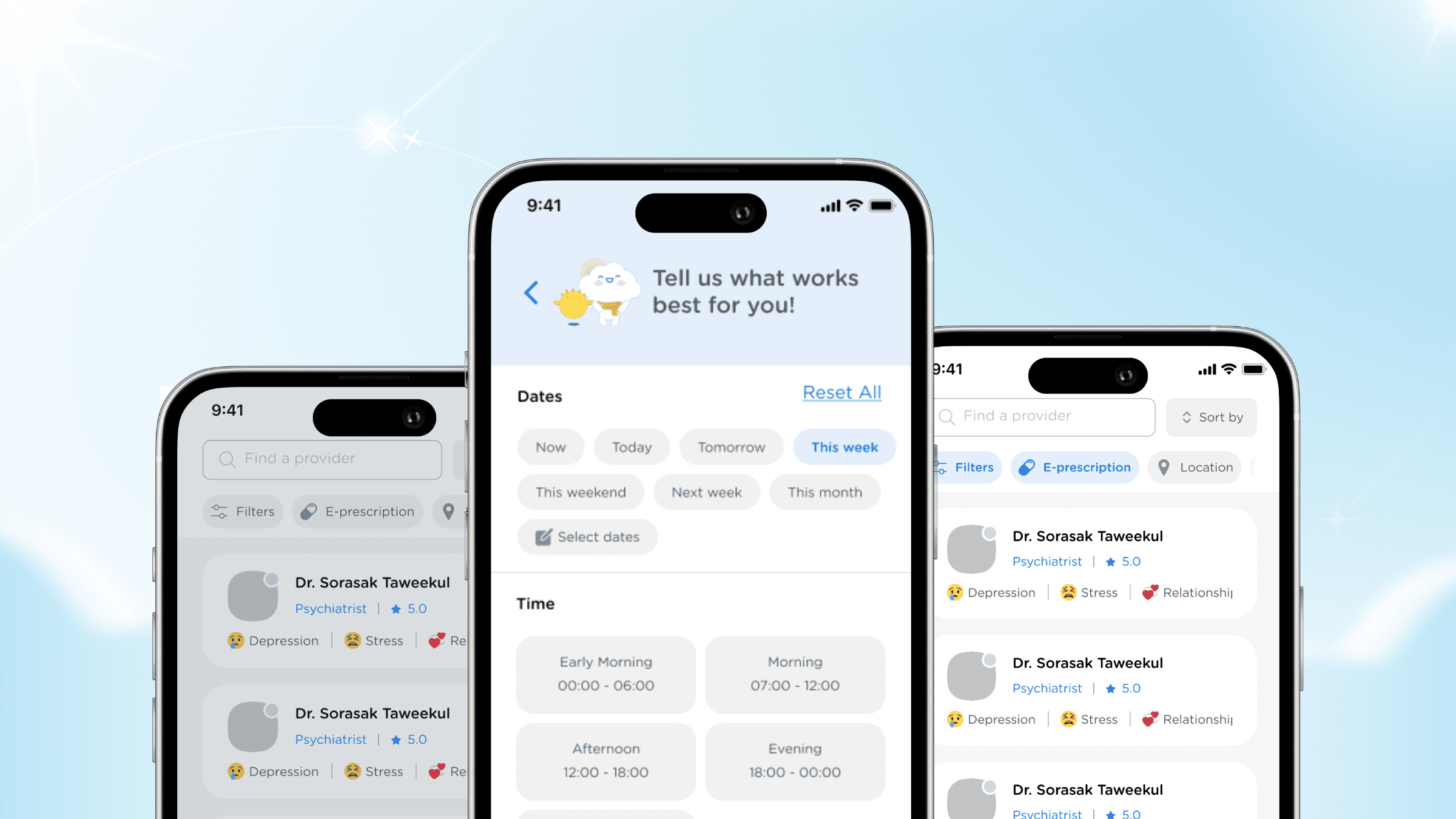
When users don’t know who to talk to,
they stop before they even start.
Many ooca users abandoned the journey at the search screen, not because they didn’t want help, but because they weren’t confident choosing the right provider. This became the core design problem I set out to solve.
background
Two basic filters
weren’t enough
for complex
human needs.
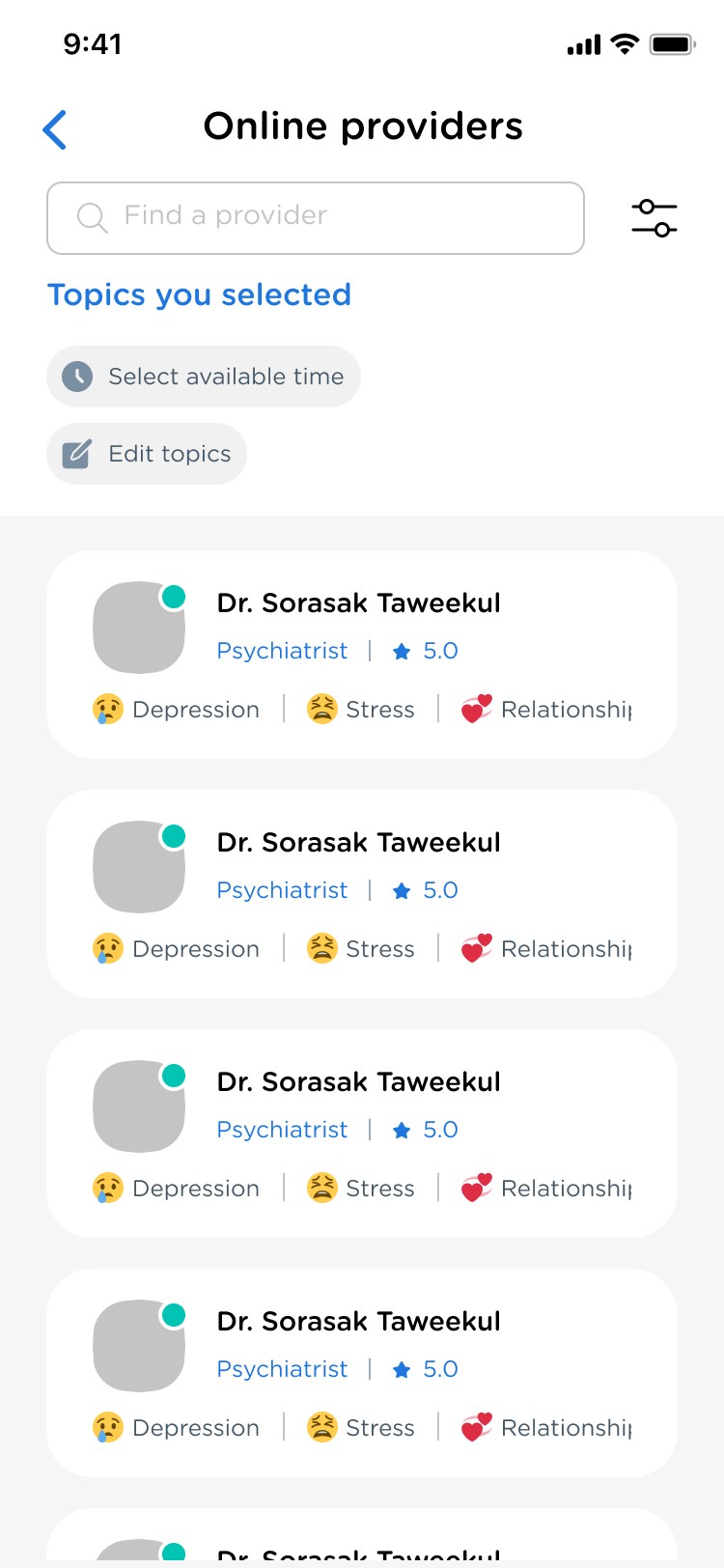
ooca connects users with mental-health professionals. However, the existing search page offered only two filters, available time and discussion topic, which were not enough for users who needed clarity and guidance in choosing a suitable provider.
As a result, this step saw one of the highest drop-off rates in the entire platform.
research
What they were
confused about.
To understand real user decision-making, I conducted interviews to uncover what people truly consider when choosing a provider. Key insights included:
Users didn’t know where to start or what qualifications to look for.
They found it exhausting to click into profiles one by one.
Many users didn’t understand the difference between provider types (e.g., psychologist vs. psychiatrist).
Users wanted reassurance: “Am I choosing the right person for my issue?”
These insights shaped a new categorization system and revealed the need for more comprehensive, guided, and educational filtering.
prototyping
Turned insights into
filters that actually guide
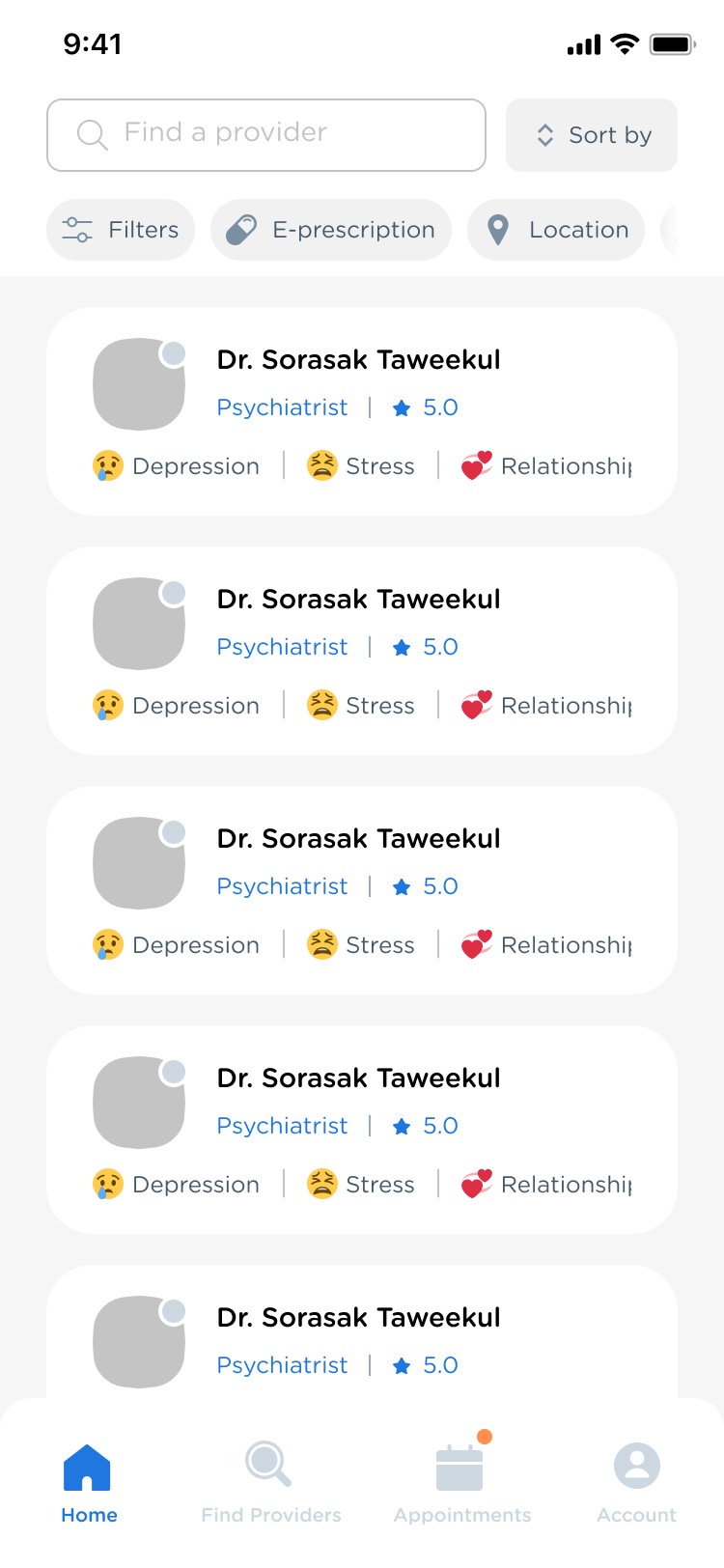
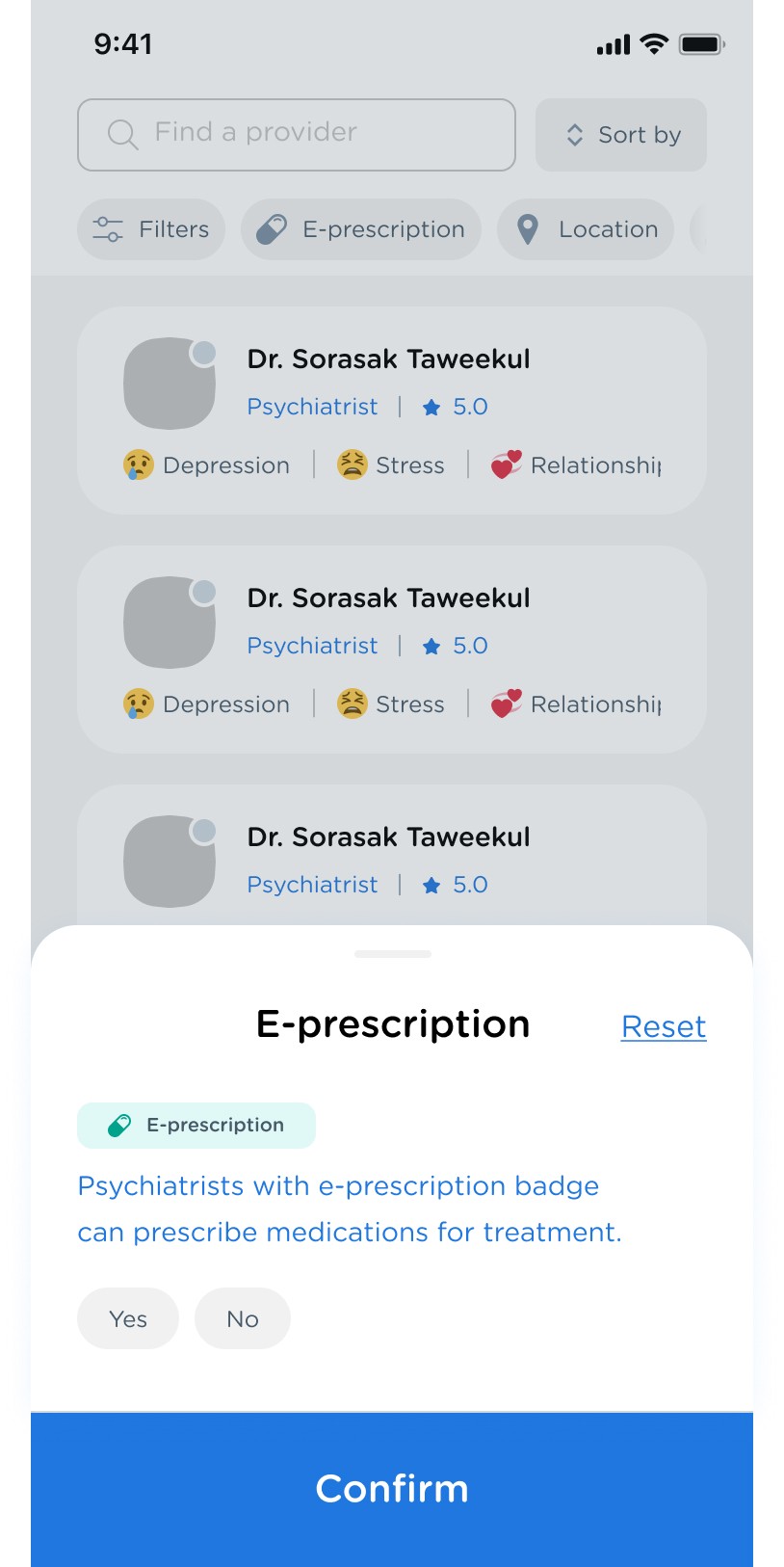
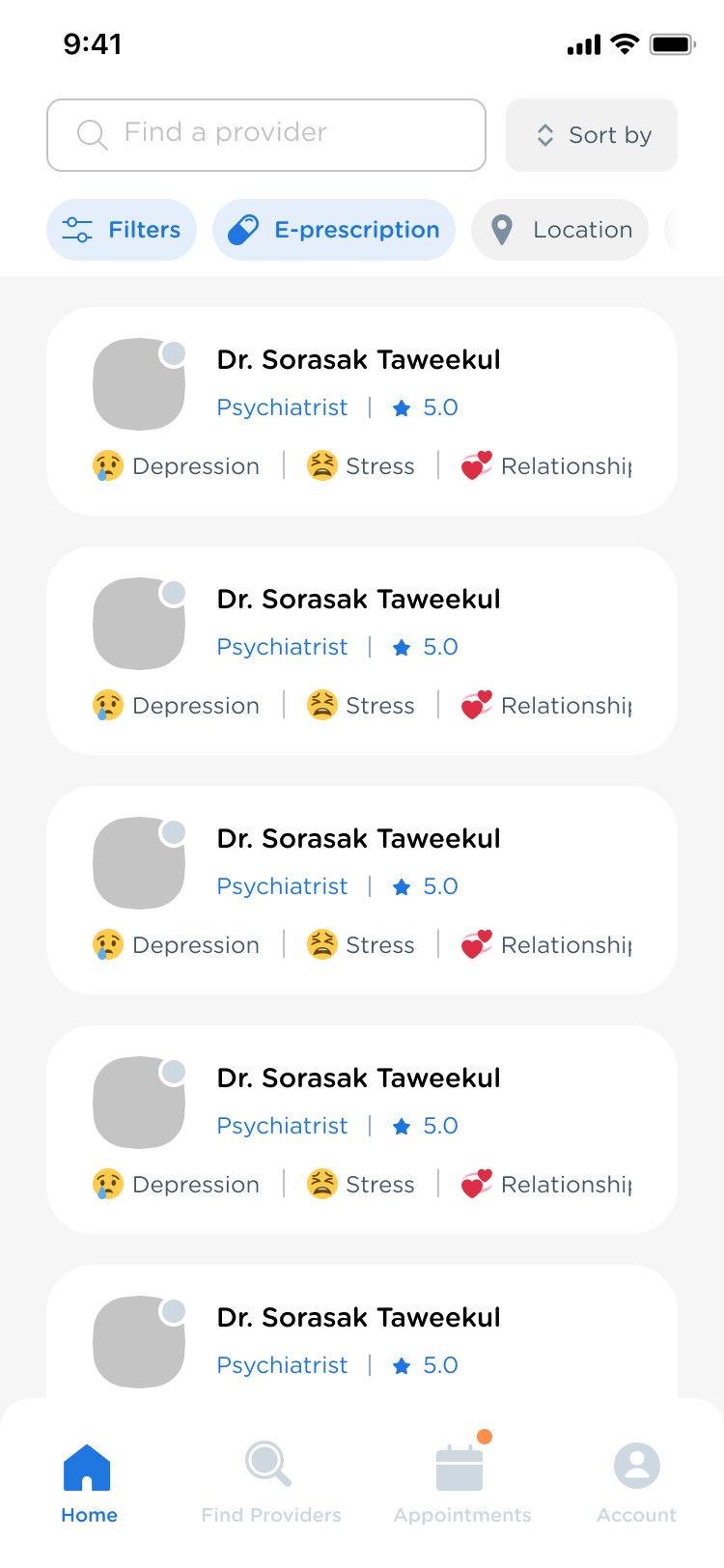
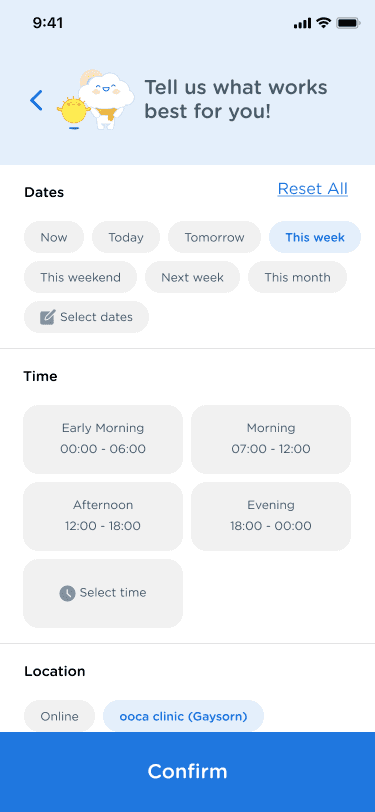
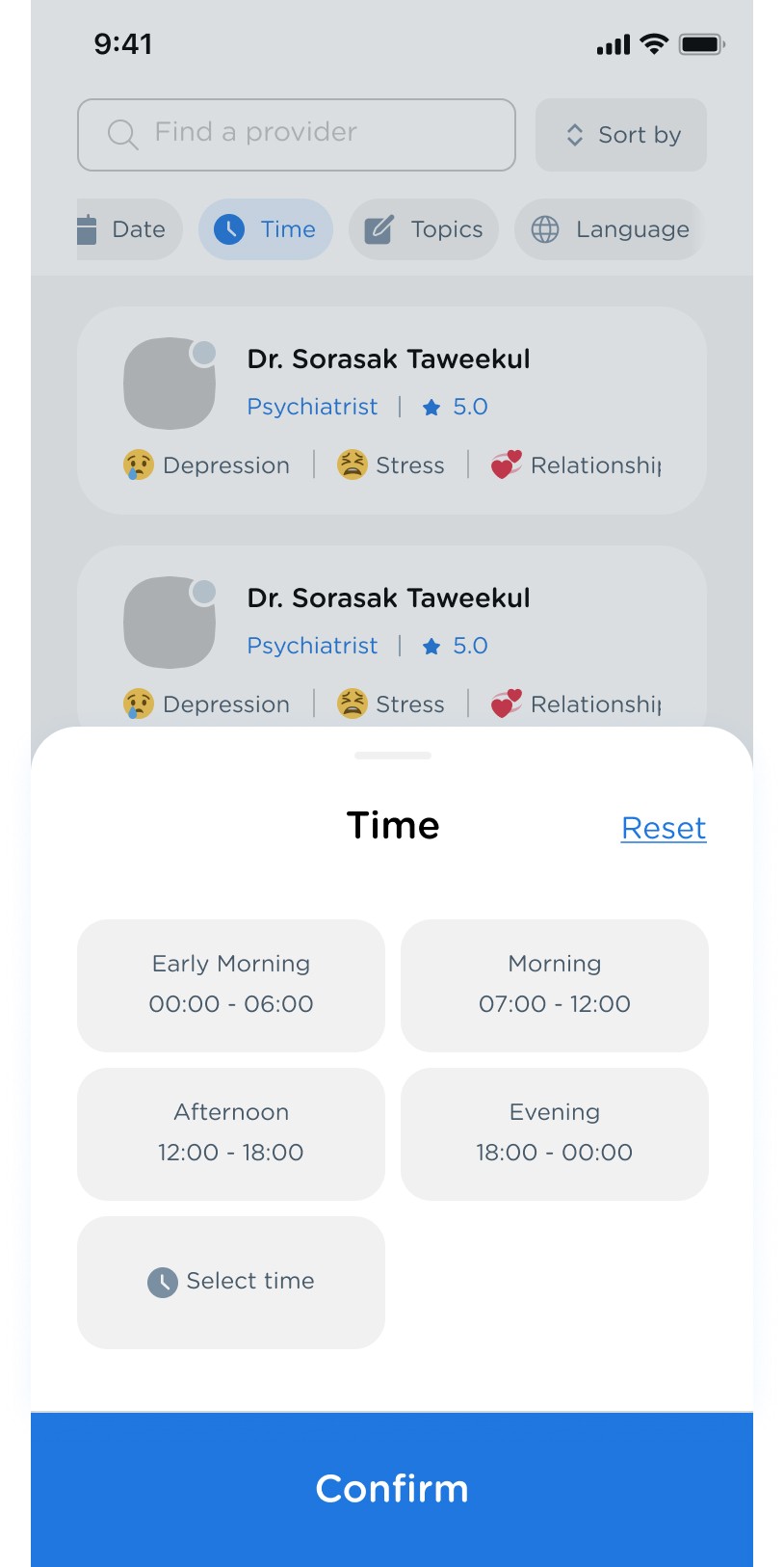
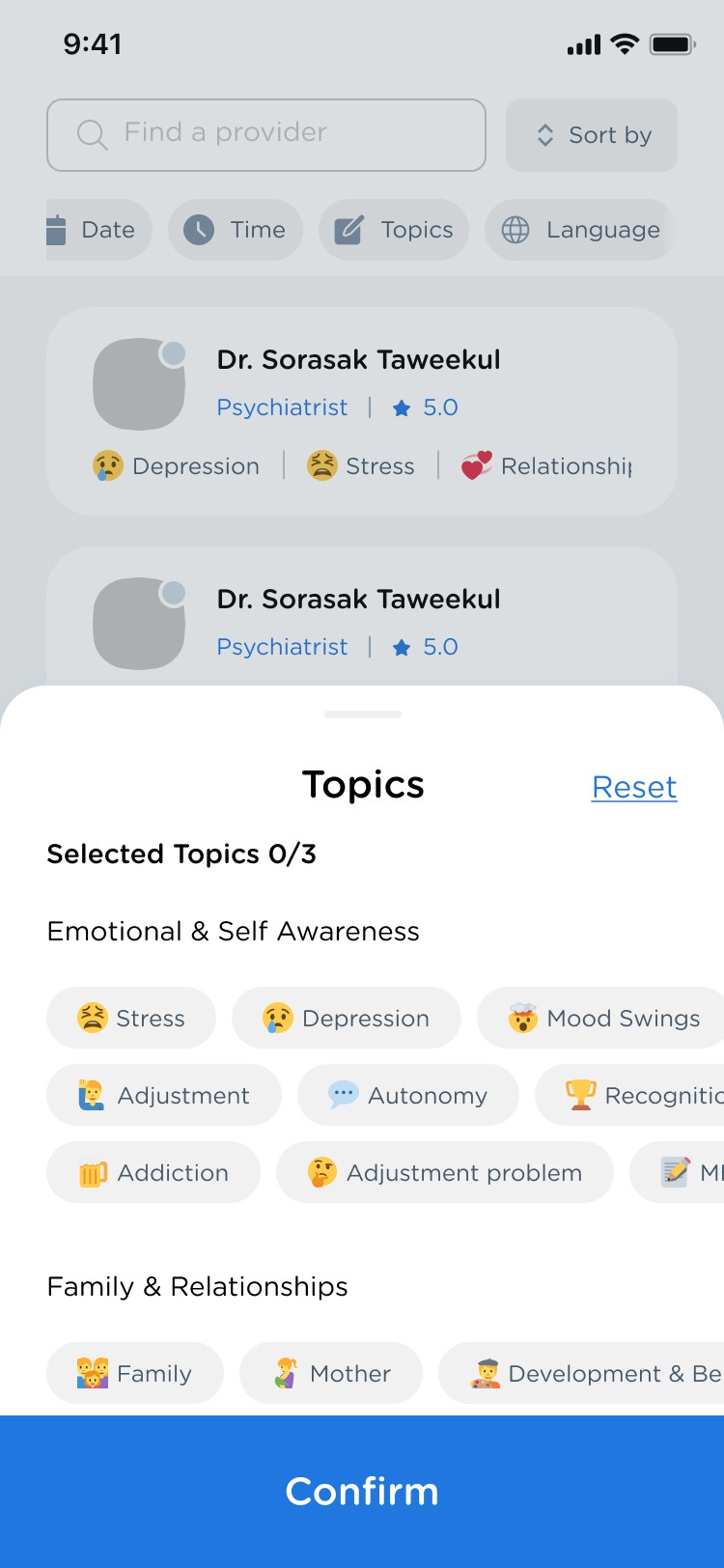
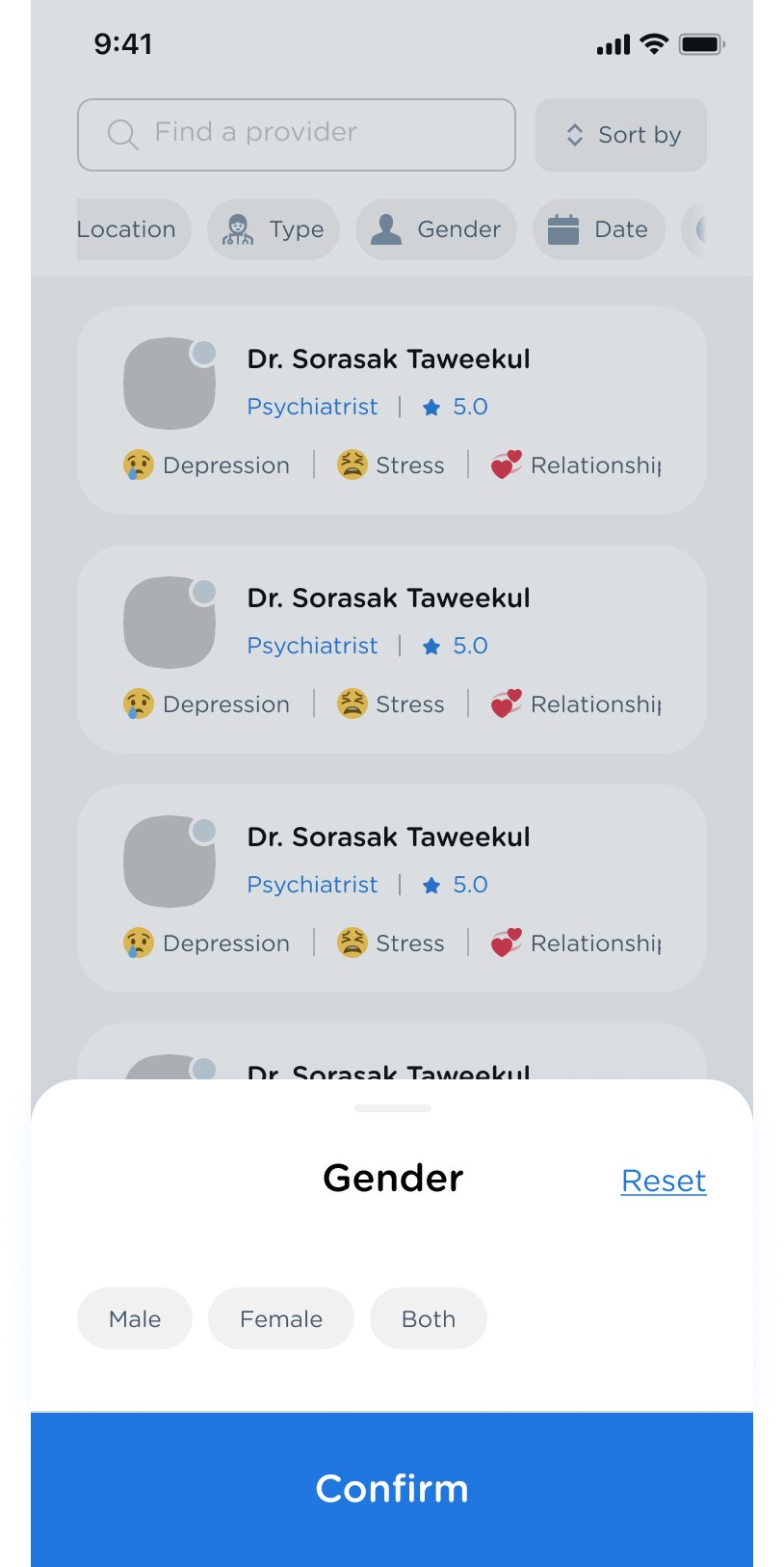
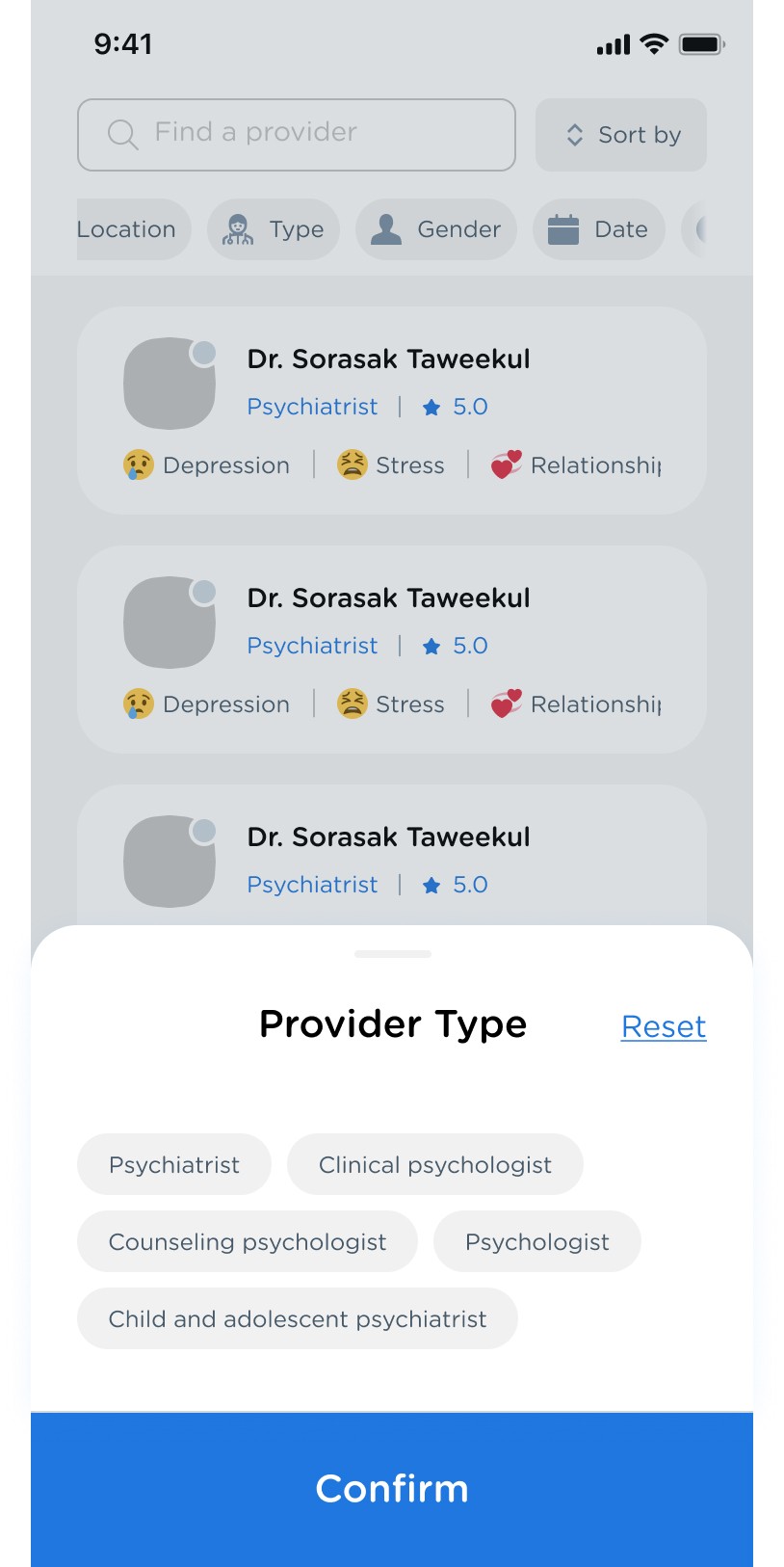
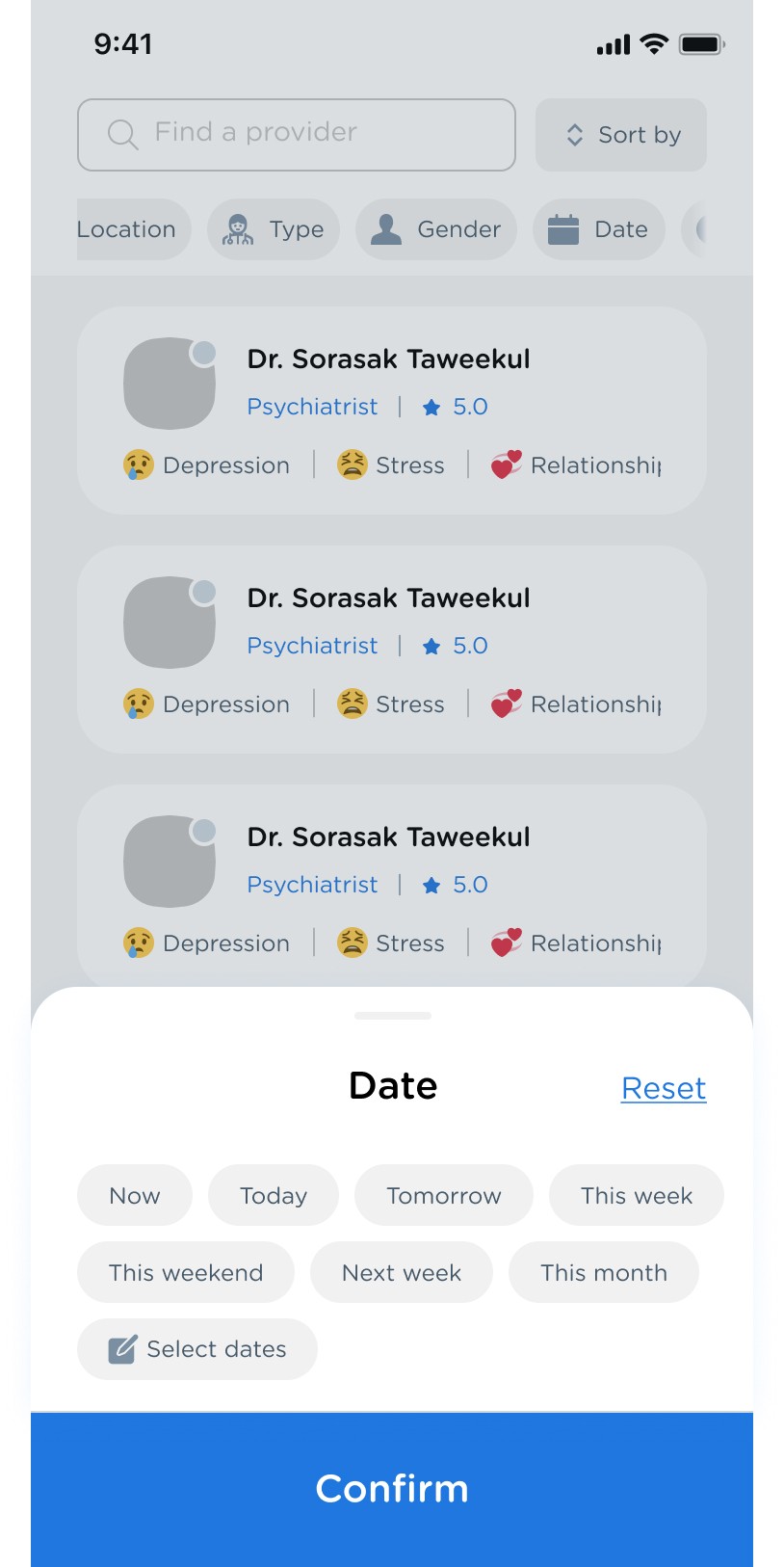
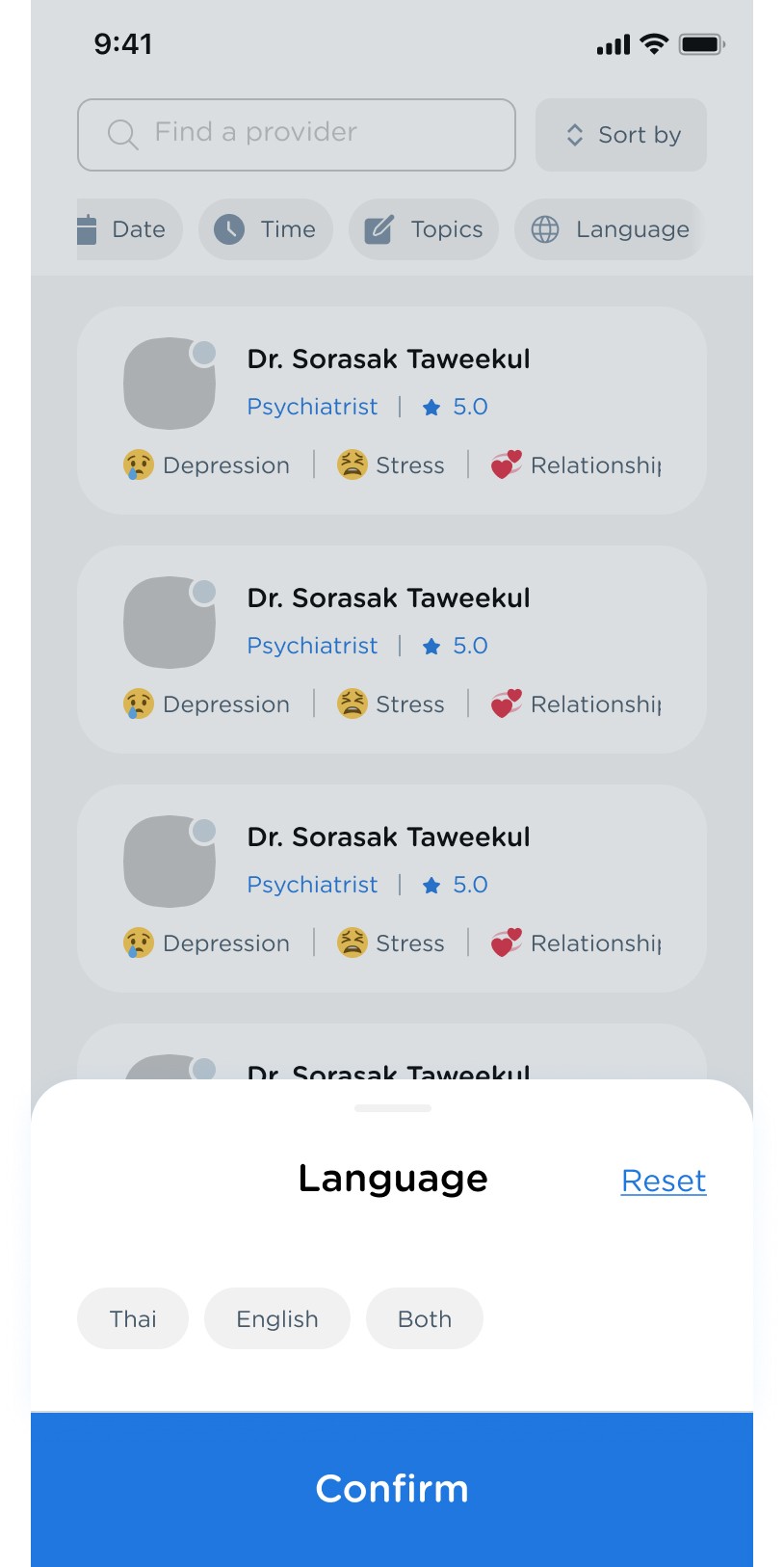
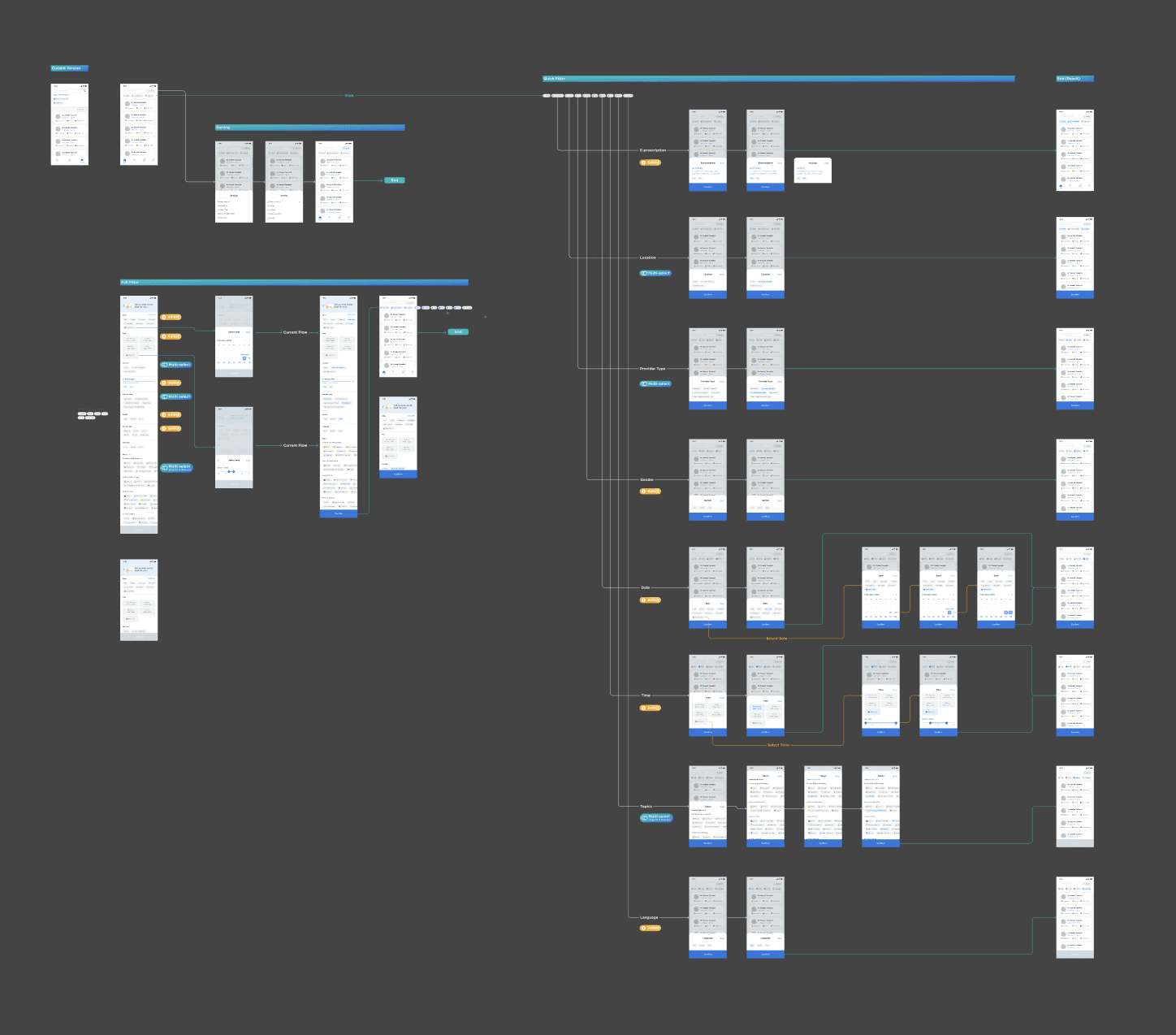
I redesigned the entire search and filter experience with:
1. A new filter taxonomy rooted in user needs
Created filter categories from user research—including expertise, approach, provider background, session style, communication preference, and more—making selection more intuitive and meaningful.
2. Universal, easy-to-learn UI patterns
No complex interactions. Everything aligns with widely familiar UI models so users don’t need to “learn” anything new.
3. Built-in explanations for mental-health concepts
Added short educational descriptions inside filters (e.g., “What’s the difference between a psychologist and a psychiatrist?”) to reduce confusion and help users feel more confident.
4. A clearer search flow
Users can now filter quickly, preview more relevant providers, and reach a decision faster with less stress.
test & launch
Easier to find
the right choice
After launching the redesigned search & filter system:
Drop-off reduced by 10% on the provider search page
Users required fewer steps to reach a booking
More users reported being confident about their provider choice
Provided a strong foundation for the next feature: Provider Matching, an automated selection flow for users who don’t know their needs
Reflection
This project taught me how crucial clarity and emotional reassurance are in mental-health product design. By grounding the solution in user psychology and real behavior patterns, I transformed a point of friction into a smoother, more supportive experience.